780 Salem Ave, Elizabeth, NJ 07208 | 908.469.1211

OUR BLOG
Living Our Values: Promoting Sustainability and Individual Choices
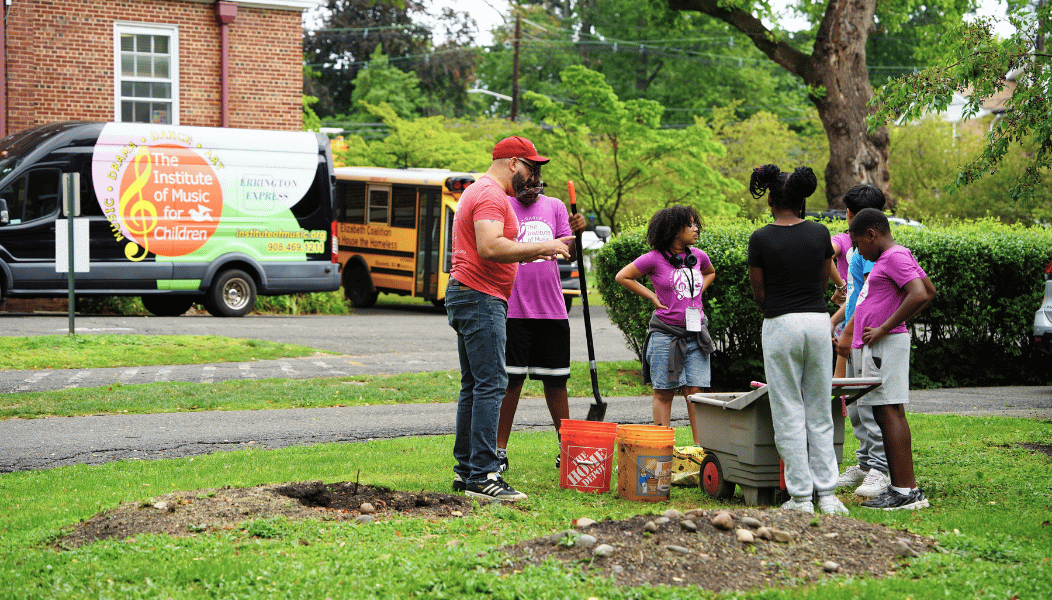
Mr. Maldonado with his Young Farmers class. He also teaches Maker's Club which takes apart old electronics and turns them into new inventions.
The Institute isn’t simply a place to pick up a new skill, or learn a new instrument—at our core, we teach good citizenry. Through Institute programs, students learn countless values beyond the practical learning of an art form: including a sense of civic engagement, community orientation, self-advocacy, and more.
One of the ways we do this is to incorporate our values into the very classes and activities that we offer here at the Institute on a regular basis. Our students often talk with elected officials about their needs and concerns, participate in community conversations, and generally connect their time in Institute spaces to their experiences in the world and their own unique perspectives about the things they care about.
This summer, the Institute had an opportunity to step into this role by offering four classes that focus on broader real-world issues, such as sustainability. Our campers were able to look at their own place in the world and how their practices can impact the future they want to bring about. This incorporated lessons on recycling and slow fashion, healthy eating, and growing healthy food options.
In the Institute’s fashion-centered class, Upcycling, students learned about practical methods of recycling, such as using found fabric, repurposing clothing, and altering old clothes instead of discarding them. Taught by Ms. Sydney Bell and Ms. Anna Kozloski, Upcycling emphasized environmentalism and clothing sustainability.
At the beginning of the class, the Teaching Artists introduced campers to a clip of a 10-year-old fashion designer who made a runway dress using just disposable grocery bags. Students followed suit, making pillows and tote bags out of old materials. Through their classes, students received the instruction and motivation needed to develop their own innovative approaches to sustainable clothing, while building long-term values of resourcefulness and environmental awareness.
“Upcycling teaches resourcefulness, and that's something that will benefit you no matter what setting you find yourself in,” Ms. Anna says. “I hope this class taught my students how to identify situations like these where sustainable practices could be useful, and respond in a way that is productive, helpful, and enriching to themselves and others.
In a unique partnership, two of our teachers collaborated on a full-circle project that incorporated both classes. Campers in our Young Farmer’s class began the cycle by planting mint, which the Young Chefs class used to make a watermelon drink and then composted the watermelon rinds to turn back into soil.
“This science lesson pushed our students to taste foods outside of their comfort zone, and to be more curious and open about exploring new things, like different herbs. They learned about how to source ingredients, what foods are healthiest, and how to use food to connect with their roots. My favorite part about teaching the class was seeing the kids flourish and explore, becoming more conscious about what to eat or not to eat, and being respectful of others around them. They learned how to share and how not to waste food,” said Ms. Carolina Moratti, one of the Young Chefs teachers.
By teaching topics like food insecurity and fashion sustainability, classes like Young Chefs and Upcycling show just how broad the Institute’s teachings can be, introducing young campers to topics beyond their classroom walls. Students leave the program having learned new values that reach far beyond their immediate disciplines.
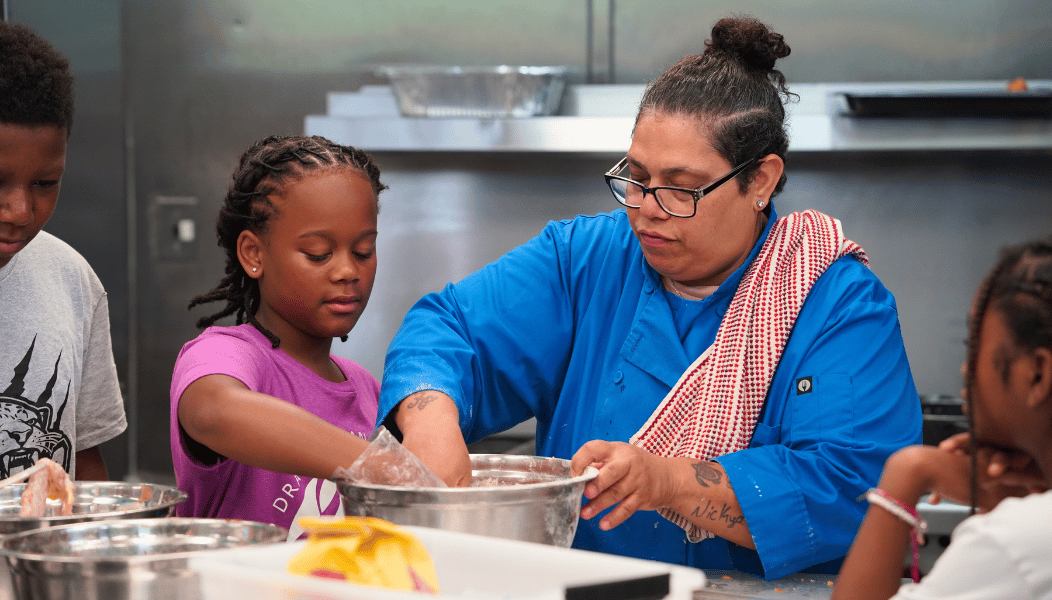
Young Chefs Teaching Artist Lisandra Cruz guiding a student
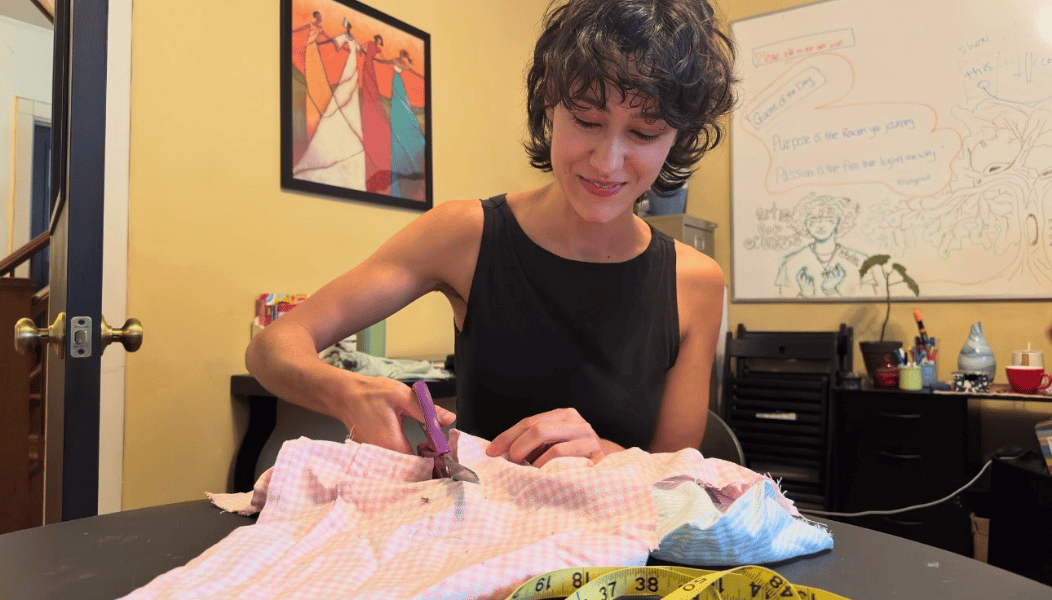
AmeriCorps VISTA and Teaching Artist Anna Kozloski working with fabrics in her Upcycling class